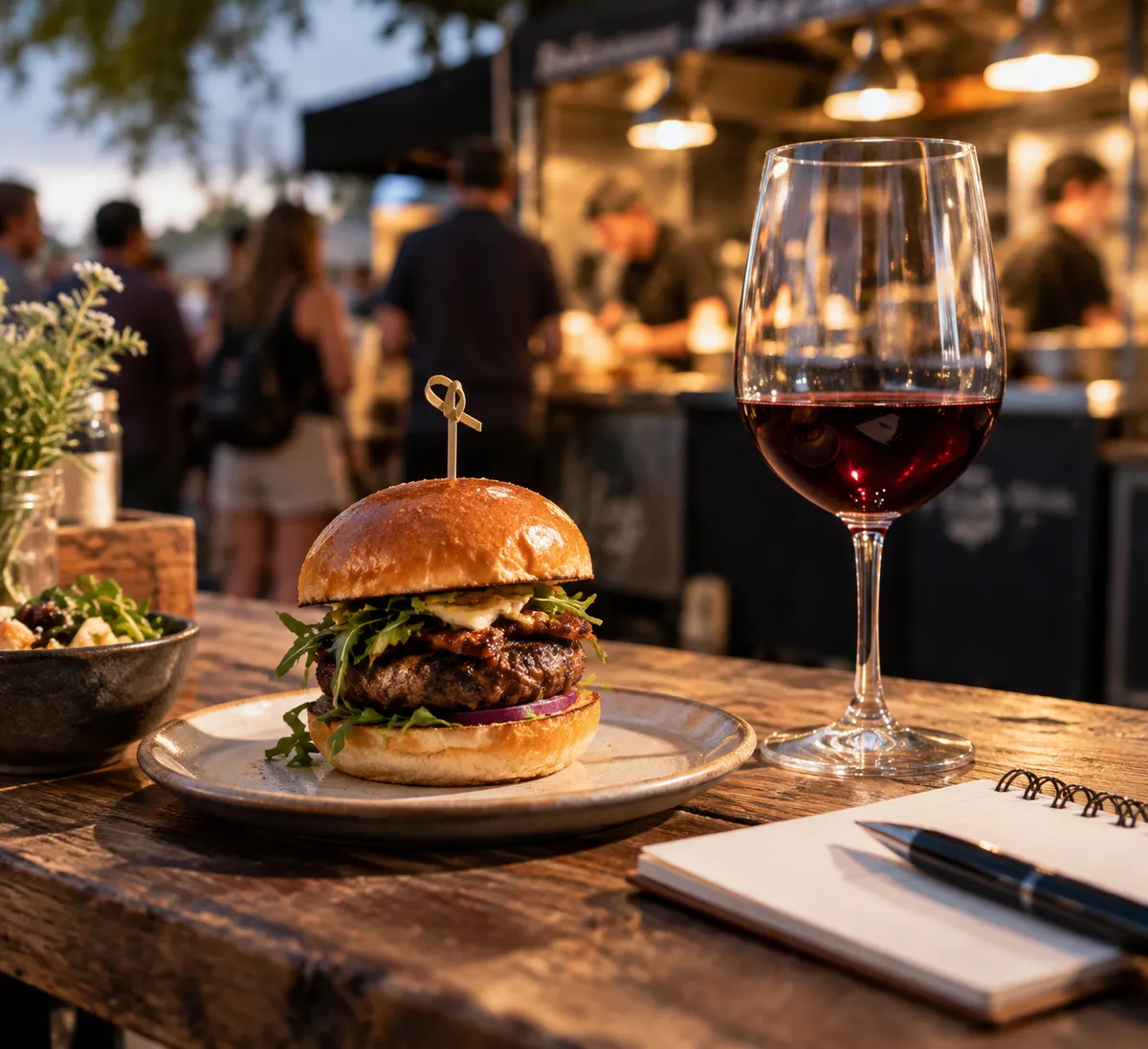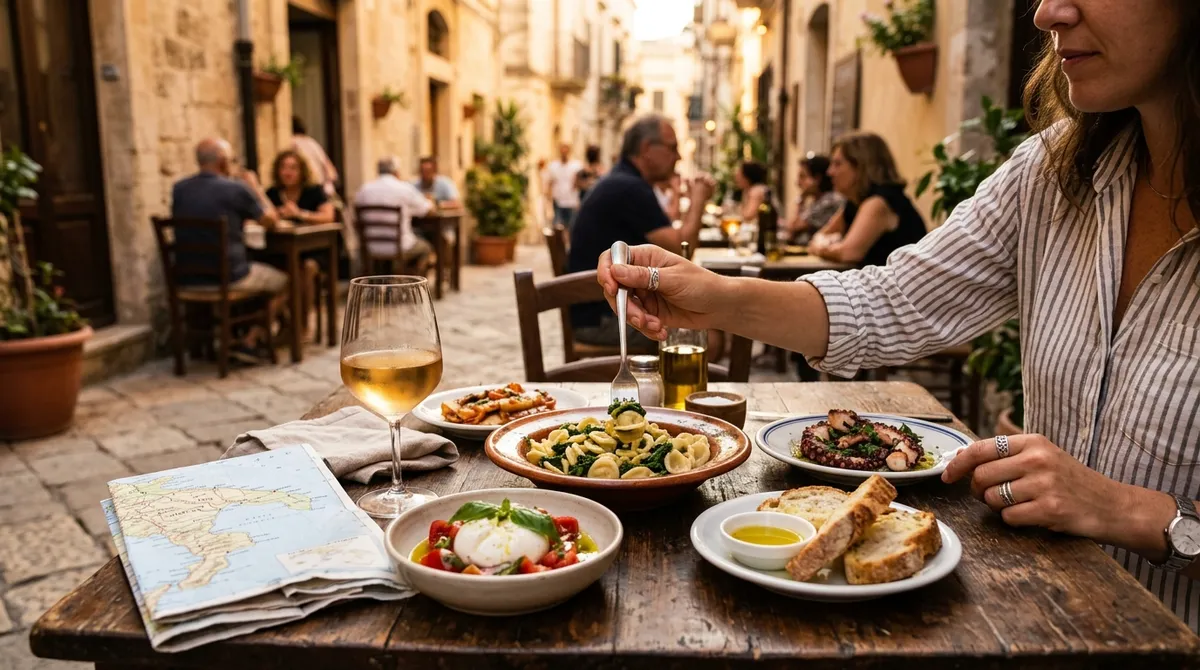
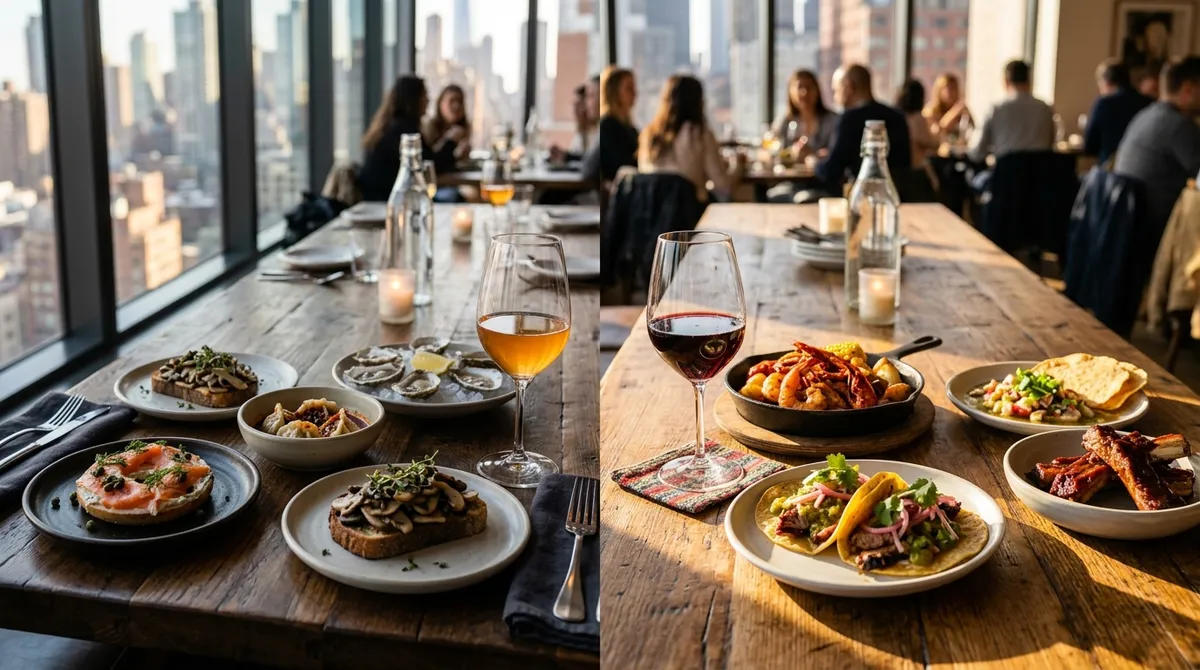
Food travel is one of the fastest-growing reasons Americans hop on a plane or hit the road — and two cities keep surfacing at the top of serious eaters' lists: New York City and Houston. They couldn't be more different in how they got there. By the end of this piece, you'll understand what makes each city culinarily distinct, which one suits your travel style, and — because wine pairs with all of it — what to pour alongside the food each city does best.
Why These Two Cities Keep Coming Up
New York City earns its reputation through sheer density and global reach. Decades of immigration layered cuisine upon cuisine until the city became, effectively, a living atlas of world food. You can eat your way through dozens of culinary traditions without leaving a single borough.
Houston's reputation is newer but no less earned. The city's food scene is driven by fusion — distinct culinary traditions colliding and producing something that doesn't exist anywhere else. Houston's diversity, particularly its large Vietnamese, Mexican, Indian, and West African communities, means the city's restaurants reflect a genuinely multicultural population rather than a tourist-facing simulation of one.
Travelandleisure identifies both cities as standout U.S. food destinations, and the distinction matters: NYC is a global archive; Houston is an active laboratory.
What New York City Does That No Other City Can
The scale is the thing. NYC's culinary scene functions at a volume — of restaurants, cuisines, price points, and neighborhoods — that no other American city matches. A single subway ride can take you from a Flushing dumpling house to a Red Hook oyster bar to a Harlem soul food institution.
The Wine Angle in New York
New York's restaurant culture has long been inseparable from its wine culture. The city's best dining rooms carry serious lists — old-world French and Italian classics, yes, but also an increasingly deep bench of natural wines, Georgian amber wines, and bottles from lesser-known appellations that sommeliers here champion before anyone else in the country does.
For the food you're most likely eating in NYC — briny oysters, rich pastrami, delicate dim sum, wood-fired Neapolitan pizza — the wine pairings almost write themselves:
- Oysters and Muscadet: The lean, mineral French white is the classic call, and NYC wine bars stock it reliably.
- Pastrami and Beaujolais: The fruity, low-tannin red cuts through fat without fighting the spice.
- Dim sum and off-dry Riesling: The slight sweetness in the wine bridges the range of flavors across a dim sum spread.
What Houston Does That Surprises First-Time Visitors
Houston's culinary identity is harder to summarize in a sentence, which is exactly the point. The city's fusion cuisine isn't a trend — it's a byproduct of a genuinely diverse population cooking for itself. Vietnamese-Cajun crawfish boils, Tex-Mex with Central American influence, Korean barbecue alongside Texas brisket: these aren't novelty items. They're what Houstonians eat.
The city also tends to fly under the radar for food travelers who default to coastal destinations, which means the dining scene still has a locals-first energy that's harder to find in New York.
The Wine Angle in Houston
Houston's bold, layered, often spice-forward cuisine calls for wines that can keep up without overpowering. The city's heat and humidity also make the case for chilled reds and high-acid whites more persuasive than in cooler climates.
A few pairings worth knowing before you go:
- Vietnamese-Cajun crawfish and dry Gewürztraminer: The wine's lychee and spice notes echo the seasoning without adding heat.
- Texas brisket and Zinfandel: A California Zin with its jammy fruit and peppery finish is a natural partner to smoke-kissed beef.
- Korean barbecue and Grüner Veltliner: The Austrian white's white pepper character and high acid clean the palate between bites of richly marinated meat.
Choosing Between Them for a Food-Focused Trip
If you want maximum variety in minimum time, New York is the answer. The concentration of exceptional food per city block is unmatched, and the wine culture is sophisticated enough that even a casual dinner can turn into an education.
If you want to eat something you genuinely cannot find anywhere else — food that reflects a specific, living cultural moment rather than a culinary tradition frozen in amber — Houston rewards the curious traveler. The city's fusion scene is still evolving, which means what you eat there this year might be different from what defines it in five.
Both cities share one quality that defines great food destinations: the best meals aren't always in the most decorated restaurants. In New York, that means a $3 slice or a Flushing soup dumpling. In Houston, it might mean a strip-mall pho spot that's been feeding the same neighborhood for 30 years.
One Practical Note on Wine Before You Travel
If you're the type who likes to bring a bottle to a great meal — a BYOB spot, a friend's dinner, a rental with a kitchen — both cities offer excellent retail options. New York has some of the country's best independent wine shops, particularly in Manhattan and Brooklyn. Houston's wine retail scene is strong too, with a growing number of shops specializing in natural and small-production wines that complement the city's adventurous food culture.
Know the corkage situation before you go: many great restaurants in both cities allow BYOB with a corkage fee, and calling ahead to ask signals exactly the kind of guest they're happy to host.
The best food trip isn't just about where you eat. It's about showing up curious, knowing a little about what you're walking into, and being willing to let the city teach you something. Both New York and Houston will do exactly that — just in completely different accents.